
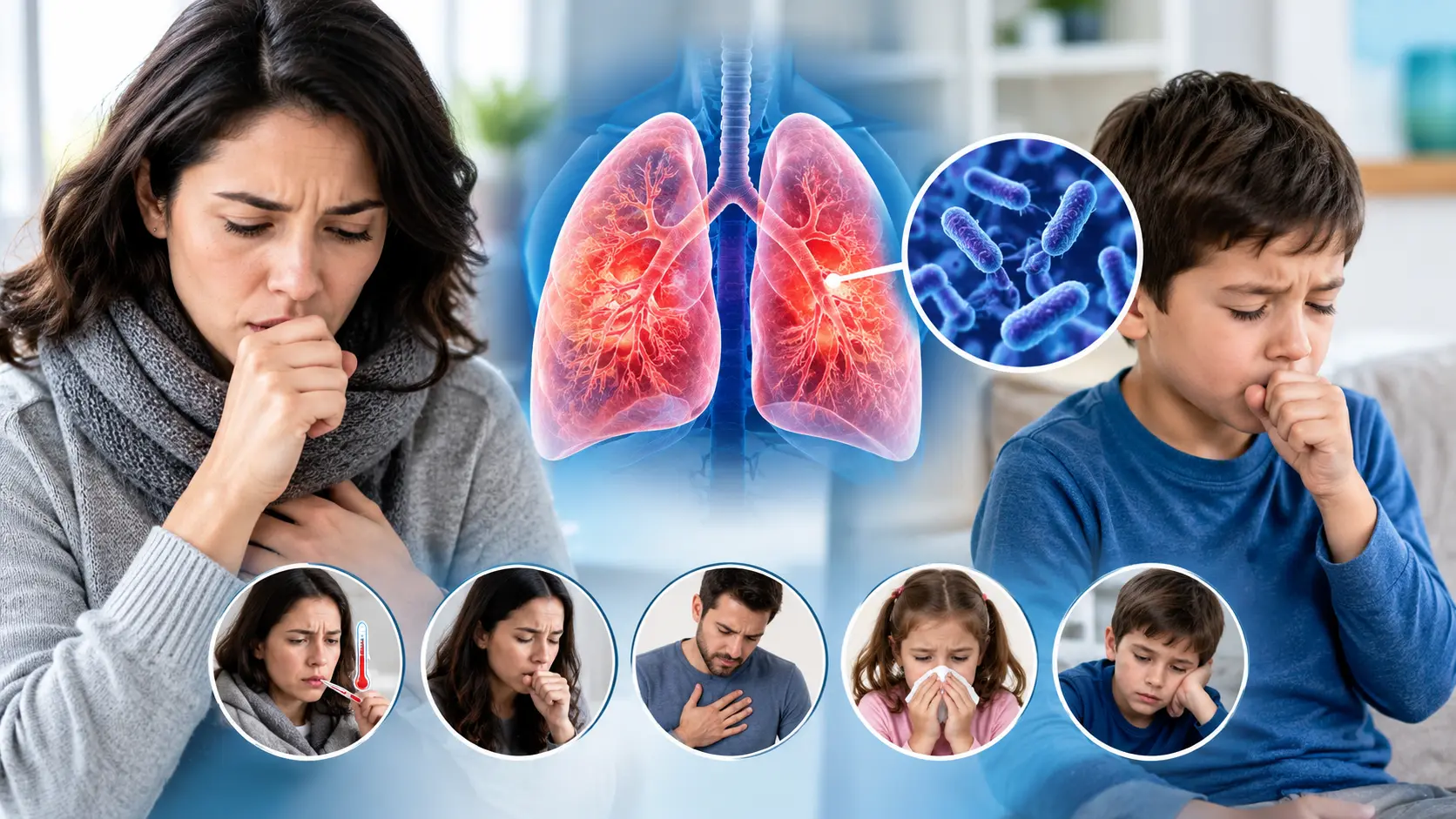
Recognizing the early walking pneumonia symptoms is essential when you have a cough that has dragged on for weeks, but you don’t feel sick enough to stay in bed. That’s often the first clue of walking pneumonia—a mild lung infection that lets you carry on with your day—school, work, or the school run—while the infection quietly runs its course. Here’s what it looks like, how it’s different in kids versus adults, and when it’s time to call a doctor.
What Is Walking Pneumonia?
Walking pneumonia is a mild form of pneumonia caused by bacteria, usually Mycoplasma pneumoniae. Unlike classic pneumonia, which can knock you flat with a high fever and leave you needing hospital care, walking pneumonia tends to feel more like a stubborn cold. You’re tired, you’re coughing, but you’re still walking around — hence the name.
What Causes It, and How Does It Spread?
Mycoplasma pneumoniae bacteria are transmitted through coughing and sneezing, just like a cold virus. The incubation period is usually two to three weeks, so it can sometimes be hard to determine the source of the infection. It often spreads among school-age children at boarding schools, nurseries, university dorms, and households.
Early Symptoms in Adults
In adults, walking pneumonia usually starts gently and builds over a few days. Common early signs include:
- A dry, persistent cough that doesn’t let up
- Low-grade fever (rarely spikes high)
- Sore throat
- Headache
- Runny or blocked nose
- Fatigue that feels heavier than a normal cold
- Chest pain, especially when coughing or breathing deeply
The cough is usually the giveaway. It often starts dry, can turn productive, and may hang around for weeks — sometimes months — after everything else has cleared up.
Early Symptoms in Children
Kids don’t always show the same pattern as adults, and the age of the child changes what to look for.
School-age children and teens (around 5 to 15 years old) are the group most commonly affected. Watch for:
- Cough that starts mild and worsens over several days
- Fever, headache, and sore throat
- Fatigue and low energy — less playful than usual
- Occasionally, a rash or red, irritated eyes alongside the usual cold-like symptoms
Children under 5 often present differently, and it’s easy to mistake for a stomach bug or a routine chest cold. Look out for:
- Wheezing or noisy breathing
- Vomiting
- Diarrhoea
- A cough, but sometimes milder than what older kids show
Because young children often get walking pneumonia at nursery or school, it frequently spreads to the rest of the household afterward.
Walking Pneumonia vs. Regular Pneumonia
| Feature | Walking Pneumonia | Regular (Typical) Pneumonia |
| Common cause | Mycoplasma pneumoniae bacteria | Bacteria (e.g. Streptococcus pneumoniae), viruses, or fungi |
| Onset | Gradual, over days | Often sudden |
| Fever | Low-grade | Can spike high |
| Severity | Mild; rarely needs bed rest | Can be severe; may need hospital care |
| Cough duration | Weeks to months | Usually resolves faster with treatment |
| Chest X-ray | May look surprisingly mild for the symptoms | Usually shows clear lung involvement |
Is Walking Pneumonia Contagious?
Yes — and this catches a lot of people out. You can still pass it on even after your symptoms have faded, which is part of why it spreads so easily through schools and offices. Good hand hygiene (20 seconds with soap and water) and covering coughs are the simplest ways to cut the risk of passing it along.
When to See a Doctor
Most cases of walking pneumonia clear up on their own. Still, book an appointment if you or your child has any of the following:
- A fever above 102°F (39°C), or a fever in an infant under 3 months
- Breathing that looks fast, laboured, or wheezy
- Bluish lips or fingertips
- Chest pain that’s getting worse, not better
- Symptoms that last more than three weeks without improvement
- Underlying conditions like asthma, since walking pneumonia can make these worse
If in doubt, get it checked. A quick physical exam — and a chest X-ray if needed — is usually enough to confirm what’s going on.
How Is Walking Pneumonia Treated?
The majority of people recover without any antibiotics since they only need rest, hydration, and a healthy immune system to fight an infection on their own
A physician may prescribe an antibiotic if the infection is severe or if the patient has asthma or an immunodeficiency. One should be aware that Mycoplasma pneumoniae infections are not treated with penicillin, such as amoxicillin, since this microorganism does not have a cell wall, which is the target of this class of medication. Instead, macrolides, such as azithromycin, are used.
Quick Answers
Is walking pneumonia serious?
Usually not. It’s a mild infection, though it can occasionally progress to something more severe, so it’s worth monitoring.
How long does walking pneumonia last?
Most people feel better within a week or two, but the cough can linger for several weeks, sometimes months.
Can adults catch walking pneumonia from kids?
Yes. It spreads easily within households, especially from school-age children who picked it up at school.
Does walking pneumonia need antibiotics?
Not always. Most mild cases clear up without them. Antibiotics are reserved for more severe or persistent cases.
The Bottom Line
Walking pneumonia is easy to dismiss as “just a cold that won’t quit,” but the mismatched pattern — mild symptoms with a cough that refuses to leave — is the real tell. If that sounds like what you or your child is going through, a quick check-up beats weeks of guessing.
Frequently Asked Questions
What is the first sign of walking pneumonia?
A persistent dry cough is usually the earliest and most noticeable sign, often starting alongside a mild sore throat and low-grade fever.
How is walking pneumonia different in children under 5?
Younger children often show wheezing, vomiting, or diarrhoea rather than the classic cough-and-fever pattern seen in older kids and adults.
Can walking pneumonia go away without treatment?
Yes, most cases resolve on their own with rest and fluids, without needing antibiotics.
How long is someone contagious with walking pneumonia?
A person can remain contagious for some time even after symptoms improve, which is why hand washing and covering coughs matter during recovery.
When should I take my child to the doctor for walking pneumonia?
See a doctor if your child has a high fever, fast or laboured breathing, bluish lips, or symptoms lasting more than three weeks.
Is walking pneumonia the same as bronchitis?
No. Bronchitis affects the airways, while walking pneumonia is a lung infection, though the two can share similar early symptoms like cough and fatigue.