“Navigating the changes of midlife can feel overwhelming, but understanding Menopause Symptoms and Treatments makes the transition much more manageable. Hot flushes out of nowhere, nights spent kicking the duvet off, and a short fuse you didn’t have last year are all part of the journey. If any of that sounds familiar, you’re probably somewhere in the menopause transition — and you’re nowhere near alone. Here’s what’s actually going on, and what helps.”
What Is Menopause, Exactly?
Menopause occurs when a woman’s menstrual period stops for 12 consecutive months. Menopause usually happens between ages 45 and 55. The years preceding menopause are referred to as perimenopause, and most symptoms that are commonly associated with menopause actually begin during this transition period.
What Are the Most Common Menopause Symptoms?
Up to 9 in 10 women notice some symptoms during this transition, and roughly a quarter describe them as severe enough to disrupt daily life. The symptoms fall into a few clear groups.
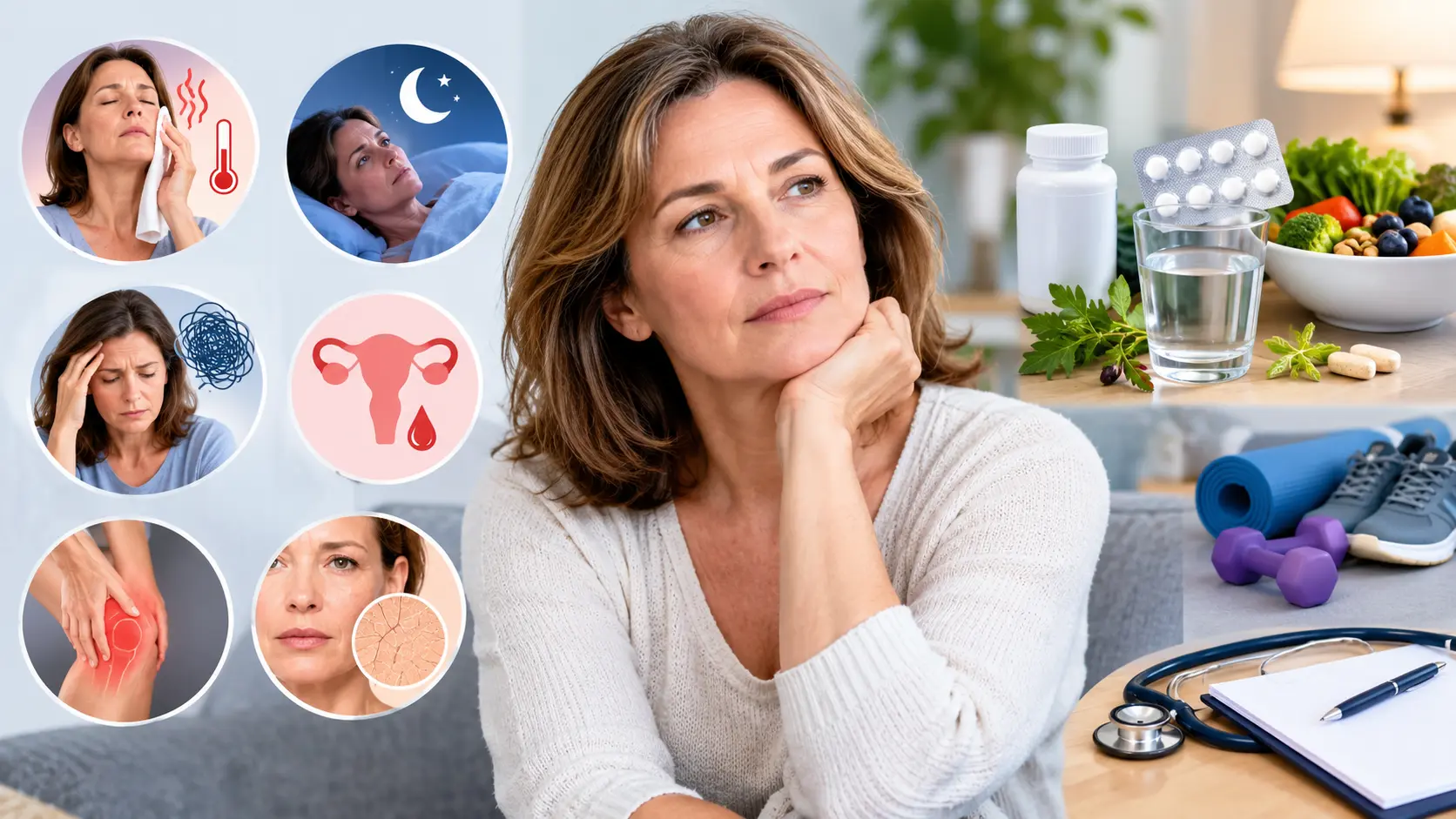
Hot flushes and night sweats. The most well-known symptom, and the one most women experience. A sudden wave of heat, often starting in the chest or face, sometimes followed by sweating or a racing heart.
Sleep trouble. Night sweats are one cause, but falling oestrogen also disrupts sleep on its own, even on nights without a flush.
Mood changes. Anxiety, irritability, low mood, and mood swings are genuinely common — not “just stress” or a personality shift, even though they can feel that way.
Brain fog. Trouble concentrating, forgetting words mid-sentence, walking into a room and forgetting why. Frustrating, and very real — it’s linked to the same hormonal shifts, not early dementia.
Physical changes. Joint aches, headaches, dry or itchy skin, weight redistribution around the middle, and thinning hair all show up for many women.
Vaginal and bladder symptoms. Vaginal dryness, discomfort during sex, and more frequent urinary tract infections are common and very treatable, though rarely talked about.
A quick note: you might get three of these symptoms, or twelve, or almost none. There’s no “normal” list everyone ticks off.
Which Treatments Actually Help?
Hormone Replacement Therapy (HRT)
HRT is the replacement of the oestrogen (and usually progesterone) that the body stops producing. It is the most effective treatment for hot flushes, night sweats, and vaginal dryness, and the American College of Obstetricians and Gynecologists currently recommends it as a first-line treatment for women who are within 10 years of their final period or under 60 years old, assuming that there are no contraindications. It comes in pills, patches, gels, and sprays, and your doctor can help you find out which one is right for you based on your symptoms and medical history.
While it is effective for many women, it is not right for everyone, and women with a history of certain cancers, blood clots, or heart disease should probably look into other options. This is something to discuss with your doctor, not something to Google.
Non-Hormonal Medications
If HRT isn’t an option, or you’d simply rather avoid it, there are real alternatives now — not just “give it time.”
- Fezolinetant (Veozah) and elinzanetant (Lynkuet) — newer, hormone-free medications approved by the FDA that target hot flushes directly by acting on the brain’s temperature-control pathway.
- Low-dose paroxetine (Brisdelle), an SSRI approved specifically for hot flushes, useful if you’re also dealing with low mood.
- Gabapentin, originally used for seizures and nerve pain, can meaningfully reduce hot flushes and help with sleep.
- Vaginal oestrogen (cream, ring, or tablet) treats dryness and bladder symptoms locally, with very little oestrogen reaching the rest of your body — an option even for some women who can’t use systemic HRT.
Lifestyle Changes That Make a Real Difference
These won’t erase severe symptoms, but they genuinely help take the edge off:
- Keeping your bedroom cool and dressing in layers you can shed quickly
- Regular exercise, which improves sleep, mood, and bone density all at once
- Cutting back on alcohol and caffeine if they trigger your flushes (track it for two weeks — the pattern is usually obvious)
- Cognitive behavioural therapy (CBT), which has solid evidence for easing both hot flushes and the anxiety that tends to ride alongside them
- Calcium and vitamin D, since bone density drops faster after menopause
HRT vs. Non-Hormonal Options: A Quick Comparison
| Option | Best for | Worth knowing |
| HRT | Hot flushes, night sweats, vaginal dryness, bone protection | Most effective option overall; not suitable for everyone |
| Veozah / Lynkuet | Hot flushes, hormone-free | Newer options, generally well tolerated |
| Low-dose paroxetine | Hot flushes plus mood symptoms | An SSRI at a much lower dose than for depression |
| Gabapentin | Hot flushes, poor sleep | Can cause drowsiness, often taken at night |
| Vaginal oestrogen | Dryness, UTIs, pain during sex | Localised, minimal effect elsewhere in the body |
| CBT / lifestyle changes | Mild-to-moderate symptoms, mood | No side effects; works best alongside treatment for severe symptoms |
When Should You See a Doctor?
Seek medical attention if you start having severe hot flashes that keep you from sleeping at night or if they affect your ability to work. You should also see a doctor if your mood changes in a way that worries you or if sex becomes painful. Seek advice if your periods become heavier or more frequent or if you haven’t had a period for a year, and you start bleeding again.
Frequently Asked Questions
What is the first sign of menopause?
Usually a change in your period pattern — lighter, heavier, or less regular — often alongside early hot flushes or sleep trouble. This is perimenopause, not full menopause yet.
How long do menopause symptoms last?
On average, around four years from your last period, though some women have symptoms for a much shorter or longer stretch — occasionally a decade or more.
Is HRT safe?
For most healthy women starting it within 10 years of their last period, yes — current guidelines consider it safe and effective. Risk depends on your personal and family health history, which is why it’s a decision made with a doctor, not a forum thread.
Can I treat menopause symptoms without medication?
Yes, for mild-to-moderate symptoms. Exercise, cooling your sleep environment, cutting trigger foods, and CBT all have real evidence behind them. For severe symptoms, they work best paired with medication rather than instead of it.
Does menopause cause weight gain?
Hormonal shifts change where fat is stored, often shifting it toward the abdomen, and metabolism naturally slows with age. It’s not inevitable, but it does mean the habits that kept your weight stable in your 30s may need adjusting.
At what age does menopause usually start?
Most women reach menopause between 45 and 55, with 51 being the average age in the United States. Menopause before 45 is considered early, and before 40, premature.
The Bottom Line
Menopause symptoms are common, manageable and not a fate you have to white-knuckle through alone. Whether that means hormone replacement therapy, a non-hormonal medication or certain lifestyle changes, talking to your doctor about what’s best for your health history and how severe your symptoms are on a daily basis is always a good idea.