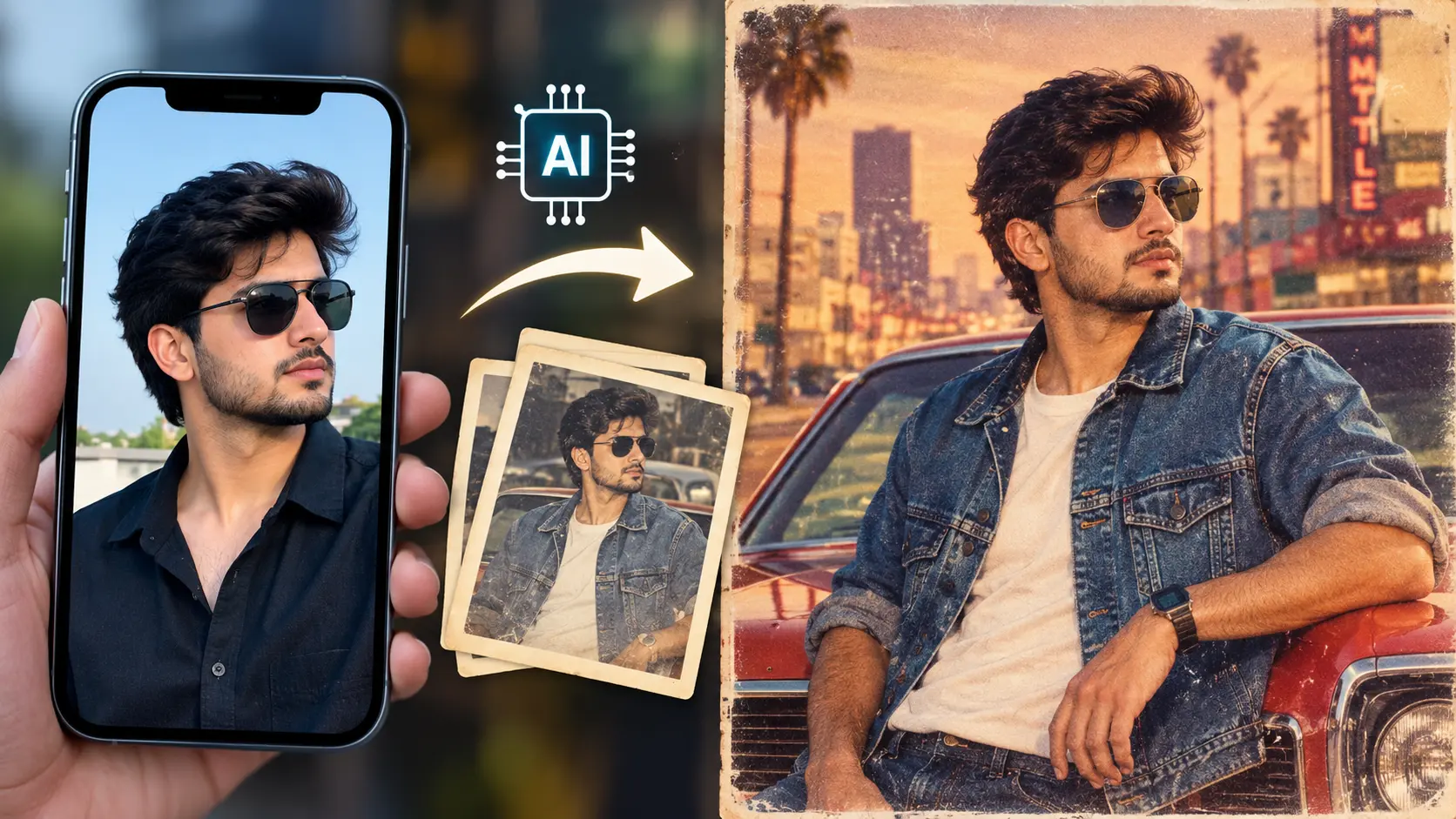
| Quick Answer The 1980s AI photo trend is a viral social media craze where people upload a normal photo of themselves to an AI tool like ChatGPT or Gemini and ask it to redraw them in an authentic 1980s style — think feathered hair, denim jackets, studio lighting, and grainy film colour. The AI keeps your face and identity the same but rebuilds the outfit, hairstyle, background, and lighting to match the decade. |
Scroll through Instagram or X right now and you’ll spot them everywhere: photos that look like they were pulled straight out of someone’s family album from 1985. Big hair, warm lighting, that slightly faded film-camera look. None of it is real. Every single one of these images was made in seconds using artificial intelligence, and the trend has spread fast enough that even politicians, actors, and cricketers have joined in.
If you’ve been wondering how everyone is doing this and whether it’s worth trying yourself, here’s the simple, no-jargon breakdown.
What Is the 1980s AI Photo Trend?
At its core, the trend is exactly what it seems to be: it takes a modern-day photo and, with the help of some AI magic, makes it appear as if it was captured fifty or sixty years ago. It’s similar in spirit to the previously viral AI trends like the Studio Ghibli-style portraits and the AI-generated action figures photos.
The crucial difference between this filter and the vintage filter one might apply in their phone is that the latter only changes the colours in the photo. Trendy AI photos go substantially deeper and allow one to make a portrait look as if it was taken in a different era. The AI filters go as far as modifying clothes and hair styles, as well as the overall scenery and lighting, while retaining the original person’s likeness.
How Does It Actually Work?
The process is simpler than most people expect. Here’s the basic version, step by step:
1. Upload a clear photo of yourself. A well-lit photo where your face is easy to see works best.
2. Ask the AI to recreate it in 1980s style. You can use ChatGPT, Google Gemini, or tools built on Google’s Nano Banana image model.
3. Describe the details you want. Mention the clothing, hairstyle, lighting, and setting — for example, a studio backdrop, feathered hair, or a shopping mall background.
4. Tell it to keep your identity intact. This is the step people often miss. Adding an instruction like “keep my facial features and skin tone exactly as they are” stops the AI from generating a face that barely looks like you.
5. Refine the result. If the first attempt isn’t quite right, you don’t need to start again. Simply reply with what to change, such as asking for softer lighting or smaller hair.
That last step is the real secret behind the best results circulating online. People aren’t getting a perfect photo on the first try — they’re having a short back-and-forth conversation with the AI until it looks right.
Why Does It Look So Convincing?
A big red flag of fake “vintage” photo used to be a person looking straight at the camera with a perfect smile. Real candid photos from the 1980s rarely looked that good. However, the most convincing AI versions require a natural, less than perfect pose — looking sideways, catching a laugh, or looking away from the camera. Combined with warm lighting and some film grain, it could look like an actual old photograph, not a computer-generated one.
Why Has It Gone Viral?
A few things are driving this trend at the same time:
- It’s genuinely easy. You don’t need any design skills or editing software.
- It’s personal. Unlike most viral content, the result is a picture of you, which makes people want to share it.
- Instagram’s “Add Yours” sticker makes it spread naturally. One person posts their 1980s photo, tags the sticker, and friends jump in with their own versions.
- Nostalgia sells. People are naturally curious about how they might have looked in a different era.
Is It Safe to Try?
Mostly yes, but a few sensible precautions are worth knowing:
- Check the app’s data settings. Photos uploaded to AI tools may be used to improve the service unless you turn that setting off in your account’s data controls.
- Avoid uploading photos of other people without asking them first.
- Use official apps. Stick to well-known platforms like ChatGPT or Gemini rather than random third-party websites asking for photo uploads, since some of those can be less trustworthy with your data.
Tips for a Better Result
- Use a photo with good, natural lighting and a clear view of your face
- Be specific about clothing and setting rather than leaving it vague
- Ask for a natural pose instead of a straight-on smile
- Refine the image with follow-up instructions instead of starting over each time
- Keep the lighting and background consistent if you’re doing a set with family or friends
Frequently Asked Questions
What app do I need for the 1980s AI photo trend?
No single app is required. Most people use ChatGPT or Google Gemini, and both can generate this style from a normal uploaded photo.
Is the 1980s AI photo trend free?
Basic image generation is available for free on both ChatGPT and Gemini, though free plans usually limit how many images you can create per day.
Does the AI use my real face?
Yes. The AI is designed to keep your actual facial features and skin tone, while changing the clothing, hairstyle, background, and lighting around it.
Why do some AI 1980s photos look fake?
Photos that look posed, with a perfect straight-on smile, tend to look more artificial. Asking the AI for a natural, candid pose usually produces a more convincing result.
Is it safe to upload my photo to an AI app?
Generally yes with well-known apps, but it’s worth checking your account’s privacy or data control settings, since some platforms use uploaded images to help train their models unless you opt out.