
Quick Answer
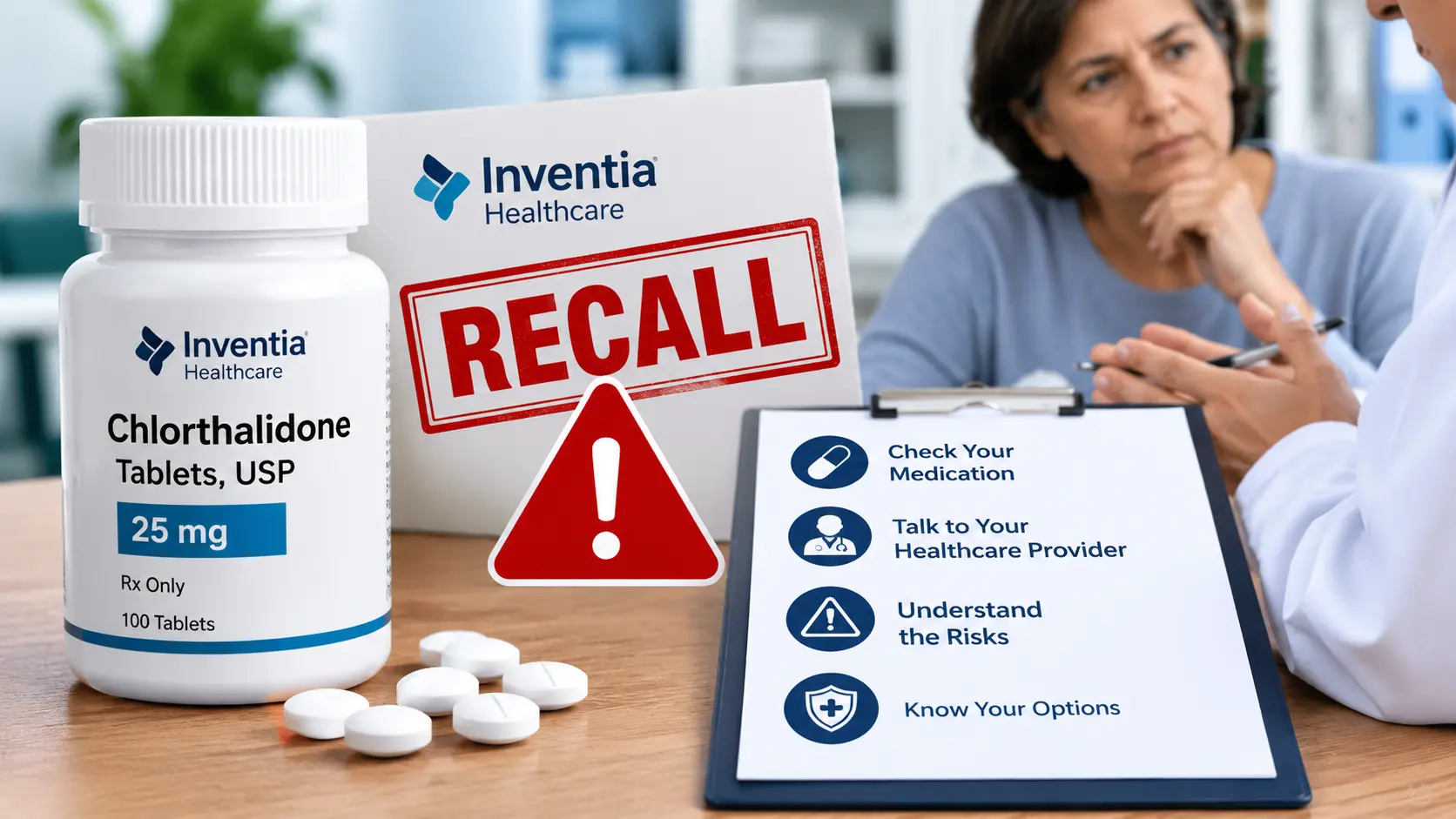
Inventia Healthcare Limited has recalled more than 25,000 bottles of its 25 mg chlorthalidone blood pressure tablets in the United States during 2026. Both recalls happened because the pills failed dissolution testing, meaning they may not break down and release the full dose properly in the body. The FDA rated both recalls Class II, its middle risk level. Patients should check their bottle’s lot number and talk to a pharmacist before making any changes, rather than stopping the medication on their own.
The Inventia Healthcare Chlorthalidone Recall has drawn significant attention after the manufacturer pulled over 25,000 bottles of 25 mg blood pressure medication from U.S. pharmacies in 2026. This Class II recall was initiated because the tablets failed dissolution testing, raising concerns about medication efficacy. If you or a family member take this prescription, here is what you need to know about the affected lots and safety guidelines.
What Happened With the Chlorthalidone Recall?
If you or a member of your family take medicine for high blood pressure, you need to spend five minutes reading this article. A drug firm, Inventia Healthcare Limited, based in Ambernath, has recalled more than 25000 bottles of its products from the U.S. pharmacies. Chlorthalidone tablets are a frequent observation among hypertensive patients’ prescriptions. This means that a considerable number of people have been affected by this medical issue.
Furthermore, it is noteworthy that there have been two recalls, spaced about a year apart, because of the same problem. The tablets did not dissolve properly, which could be dangerous for patients’ health.
What Is Chlorthalidone Used For?
Chlorthalidone is a diuretic, often called a water pill. In plain terms, it tells your kidneys to flush out extra water and salt through urine. Less fluid in your blood vessels means less pressure pushing against their walls, which is why doctors prescribe it for high blood pressure. It’s also used for fluid buildup caused by heart failure, liver disease, or kidney problems. It’s a common, inexpensive, and widely trusted medication, which is part of why this recall has gotten so much attention.
Why Were the Tablets Recalled?
Summarize in simple terms what happened. The problem was that the tablets didn’t pass the dissolution test. This means that each dose didn’t start to break down in your stomach at the correct rate to be absorbed into your bloodstream. This can cause the medication to not do its intended job despite being the correct dosage and taken as instructed. It is not because the tablets were mixed in with another type of medication or became contaminated with another type of substance. It is because the medication’s intended release rate in the stomach was slower than the required amount to properly help the consumer.
Which Batches Are Affected?
Two separate recalls make up the 25,000-plus bottles pulled from the market. Here’s a quick breakdown:
| Recall Date | Batch / Lot No. | Bottle Size | Bottles Recalled |
| June 5, 2026 | RISA24001 / RISB24002 | 100-count / 1,000-count | 11,460 |
| Sept. 3, 2026 | RISA24002 | 100-count | 13,567 |
Both recalls involve the 25 mg strength of Chlorthalidone Tablets, USP, distributed nationwide by Rising Pharma Holdings Inc. of East Brunswick, New Jersey. The National Drug Code tied to the September recall is 64980-599-01, and both batches expire in April 2027.
How Serious Is This Recall?
The FDA sorts recalls into three classes, based on risk. Class I is the most serious, reserved for products that could cause death or serious injury. Class III is the mildest, for products unlikely to cause any health problem at all. This chlorthalidone recall sits in the middle, Class II, which the FDA defines as a situation where a product might cause temporary or reversible health effects, with only a remote chance of anything more serious. In plain English: this is a quality problem worth taking seriously, but it’s not the kind of recall that should cause panic.
What Should You Do If You Have This Medication?
Begin by removing the medication from the bottle and ensuring to check the expiry date as well as the lot number on the label and comparing it to the ones listed above. If they match, do not discontinue use of the medication unless your healthcare provider advises you otherwise. Abrupt discontinuation of blood pressure medications may result in increased blood pressure, so it should only be done if another drug is found to replace the one you discontinued. You may ask your pharmacist to check your prescription records and request an alternative batch or brand of the same medication if you are concerned about the recalled product. If you have noticed any changes to your blood pressure readings, make sure to alert your doctor.
In addition, you may contact the Food and Drug Administration’s MedWatch website to report the issue and any concerns or adverse effects you may have noted following the use of the recalled medication.
A Quick Timeline of the Two Recalls
- June 5, 2026: Inventia Healthcare initiates the first recall, covering 11,460 bottles across two batches (RISA24001, RISB24002).
- June 22, 2026: The FDA assigns a Class II risk classification to the first recall.
- Sept. 3, 2026: A second recall begins, covering 13,567 bottles from batch RISA24002.
- Sept. 17, 2026: The FDA classifies the second recall as Class II as well.
Quick Answers (FAQ)
What is the Inventia Healthcare chlorthalidone recall?
Inventia Healthcare Limited, based in India, has recalled more than 25,000 bottles of its 25 mg chlorthalidone blood pressure tablets across two separate actions in 2026, both because the pills failed FDA dissolution testing.
Is this recall dangerous?
The FDA classified both recalls as Class II, meaning the health risk is generally low. The main concern is that the pills may not release their full dose properly, which could make blood pressure control less effective, not that the pills are toxic or contaminated.
Should I stop taking my chlorthalidone if it’s on the recall list?
No. The FDA advises patients not to stop taking a Class II recalled medication on their own. Talk to your pharmacist or doctor first, since stopping a blood pressure medication suddenly can be riskier than a dissolution issue.
How do I know if my bottle is affected?
Check the National Drug Code (NDC), lot number, and expiration date printed on your pharmacy label or bottle against the batch numbers RISA24001, RISB24002, and RISA24002, all expiring April 2027.
Who distributed the recalled chlorthalidone in the US?
Rising Pharma Holdings Inc., based in East Brunswick, New Jersey, distributed the affected bottles nationwide on behalf of manufacturer Inventia Healthcare Limited.
Sources & Further Reading
U.S. FDA – Recalls, Market Withdrawals & Safety Alerts
FDA MedWatch – Report an Adverse Event
Mayo Clinic – Chlorthalidone (Oral Route) Overview
Always confirm the latest batch numbers and classification status directly on the FDA’s enforcement report page, since recall details can be updated as investigations continue.