
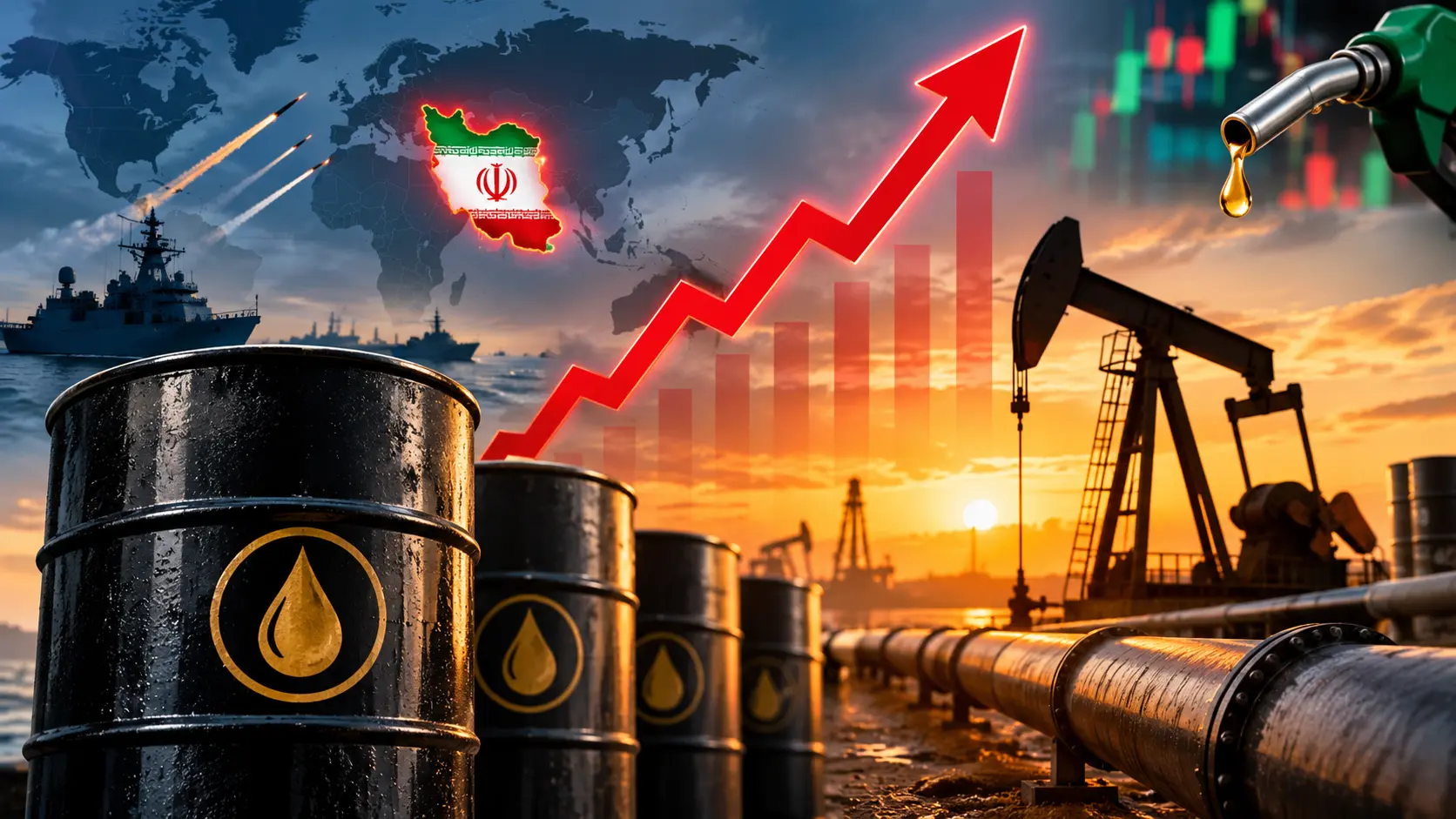
Filled up your tank lately and felt a little sick looking at the total? You’re not imagining it. Oil prices rising in August 2026 have pushed the national average for gas past $4 a gallon again, and the reasons come down to fear, supply, and one very narrow stretch of water halfway around the world.
What’s Actually Driving Oil Prices Rising This Month?
Brent crude, the global benchmark, was trading around $87 a barrel in mid-August 2026, up more than 30% from the same time last year. U.S. crude (WTI) sat closer to $81. The single biggest reason is uncertainty over the Strait of Hormuz — the narrow waterway between Iran and Oman that a huge share of the world’s oil has to pass through on its way to market.
Talks about a U.S.-Iran deal to fully reopen the strait have dragged on, with both sides demanding compensation before anyone signs anything. That kind of stalemate makes traders nervous, and nervous traders bid prices up even when oil is technically still flowing. Some tankers are reportedly sailing through the strait with their transponders switched off just to stay under the radar, which tells you how tense things still are out there.
There’s a second factor working in the background: the emergency oil reserves that countries built up earlier in the year are starting to run thinner. Analysts have pointed out that the cushion which kept prices from spiking harder during the worst of the disruption is fading, so the market has less of a buffer left to absorb bad news.
How Much More Are You Paying at the Pump?
Here’s the number that actually hits your wallet: the national average for a gallon of regular gasoline was running between $4.06 and $4.17 through early-to-mid August 2026, depending on the week. That’s roughly 30% higher than a year ago, when the average sat closer to $3.15. Every single state saw gas prices climb year-over-year — there’s no cheap corner of the country to hide in this time.
| State | Avg. Price/Gallon (Aug 2026) | Notes |
| California | $5.66 | Highest in the country — high state taxes, special fuel blend |
| Hawaii | $5.45 | Import costs push prices up |
| Washington | $5.13 | Third-highest state average |
| National Average | $4.06–$4.17 | Up about 30% from a year ago |
| Texas | $3.60 | Lowest in the country — close to Gulf Coast refineries |
Notice the pattern? States near Gulf Coast refineries, like Texas, tend to pay less. States with higher fuel taxes and stricter emissions rules, like California, pay the most. If you live in one of the pricier states, that gap isn’t going away just because national crude prices ease a little — state taxes and regulations are baked in either way.
Why the Strait of Hormuz Matters So Much
It’s easy to hear “Middle East tensions” and tune out, but this one’s worth understanding. An estimated 9 million barrels of oil move through the Strait of Hormuz every single day. That’s a fifth of the world’s oil supply funneling through a channel just 21 miles wide at its narrowest point. There’s no easy detour — tankers can’t simply reroute around it without adding weeks and serious cost.
When a chokepoint that important is in question, oil prices react to the threat, not just the reality. Even a rumor of a blockade or an attack on a tanker can add a few dollars to a barrel overnight. That’s exactly what’s been happening through the summer of 2026.
Is Relief Coming? What the Forecasts Say
Here’s some good news, with a caveat. J.P. Morgan Global Research expects Brent crude to average $86 a barrel in the third quarter of 2026, easing to $80 in the fourth quarter, and landing around $78 by year end. Their reasoning: Persian Gulf oil supply is recovering faster than expected, and demand has taken a bigger hit than anyone predicted, especially in China.
Looking further out, J.P. Morgan’s research team expects prices to keep drifting down into the low $60s per barrel sometime in the second half of 2027, as the market moves from a supply squeeze to an actual surplus. OPEC has already cut its 2026 global demand growth forecast four months in a row, which supports that softer outlook — assuming the Strait of Hormuz situation doesn’t take another turn for the worse.
My honest read: don’t count on a quick fix. A few good weeks of headlines out of the Strait talks could knock prices down fast, but one bad incident could just as easily send them right back up. This is not a market where you can predict next month with any real confidence.
What This Means for Your Wallet Right Now
A few practical moves actually help while prices stay elevated. Gas price comparison apps like GasBuddy can save you real money just by pointing you to the cheaper station across town — differences of 30 to 50 cents a gallon between stations a few miles apart aren’t unusual. If your credit card offers gas rewards, this is the season to actually use that category instead of ignoring it.
If you’re weighing an EV purchase, the math has shifted further in that direction. Charging an EV at home typically runs somewhere around $46 a month for average driving, compared to well over $100 a month to fill up a truck or SUV at today’s pump prices. That’s not a small gap anymore.
One thing to keep an eye on: the U.S. Strategic Petroleum Reserve exists exactly for moments like this. If prices keep climbing into September, don’t be surprised if there’s political pressure to tap it again — it won’t fix the underlying problem, but it can take some heat off pump prices for a few weeks.
The Bottom Line
Oil prices are rising in August 2026 mainly because of fear around the Strait of Hormuz, not because the world suddenly needs more oil — demand forecasts are actually falling. That combination is unusual, and it’s why forecasters expect prices to soften later in the year even while today’s numbers sting. Keep watching the Strait of Hormuz headlines more than anything else; that’s the story that will move your gas bill next.
Frequently Asked Questions
Why are gas prices going up in August 2026?
Gas prices are rising because crude oil, the main ingredient in gasoline, has gotten more expensive. Ongoing uncertainty around the Strait of Hormuz — a narrow waterway that roughly 9 million barrels of oil pass through daily — is the biggest reason, along with lower supply cushions built up earlier in the year.
What is the Strait of Hormuz and why does it affect oil prices?
The Strait of Hormuz is a narrow shipping channel between Iran and Oman that a large share of the world’s oil exports must pass through. Any disruption, real or threatened, makes buyers nervous about future supply, which pushes prices up even before any oil actually stops flowing.
Will oil prices go down soon?
Most major forecasters expect some relief later in 2026. J.P. Morgan Global Research projects Brent crude easing toward $78 a barrel by the end of 2026 as Persian Gulf supply recovers, with prices potentially dropping into the low $60s by the second half of 2027.
How much has gas gone up compared to last year?
As of early August 2026, the national average price for regular gasoline was around $4.10 a gallon, roughly 30% higher than the same time in 2025, when the average sat near $3.15.
Does OPEC cutting its demand forecast mean prices should fall?
Not immediately. OPEC and the IEA have both lowered their oil demand growth forecasts for 2026, which points to softer demand ahead. But current prices are being driven more by supply fears tied to the Middle East than by today’s demand numbers, so the two forces are pulling in opposite directions right now.