
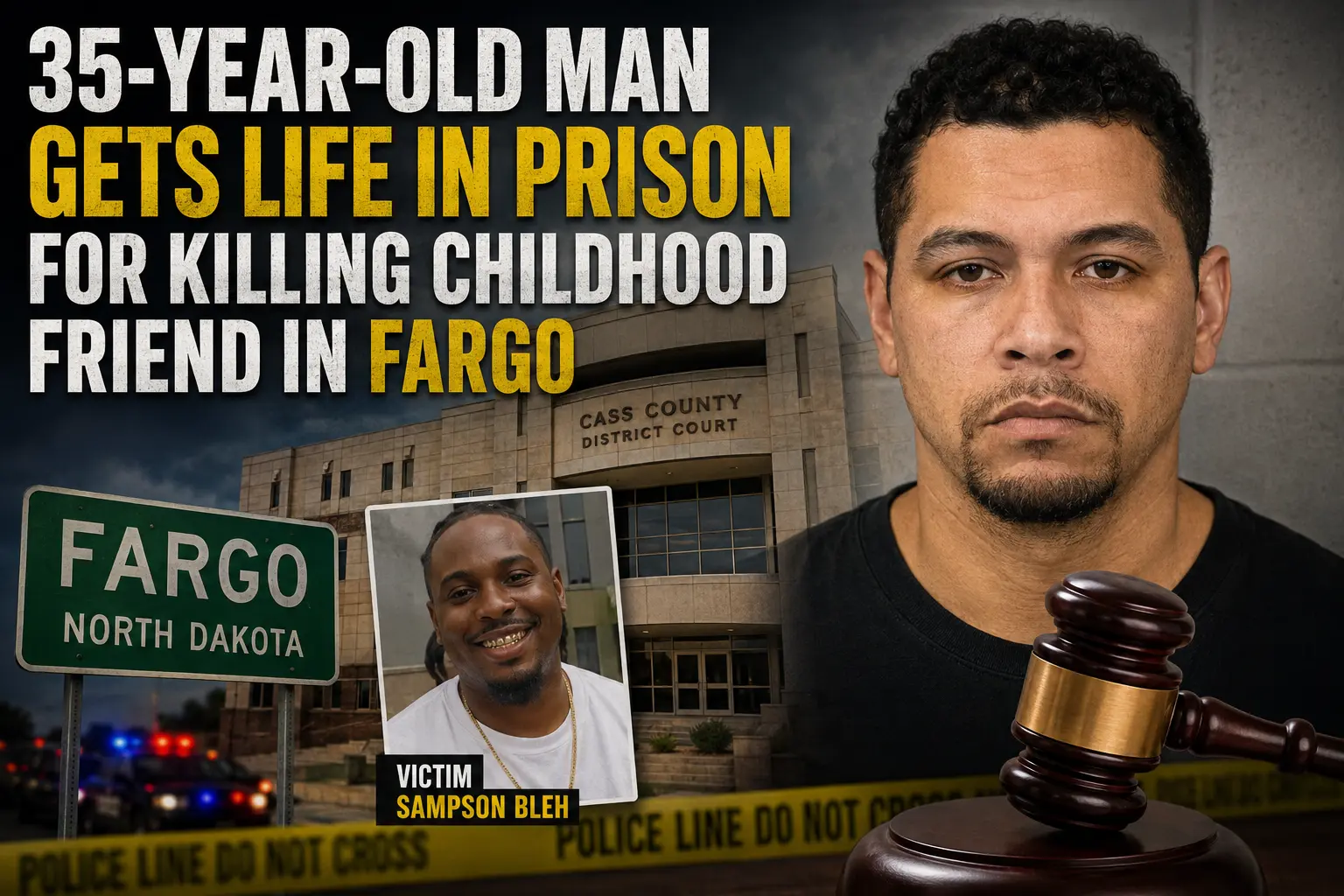
FARGO, N.D. — A courtroom in Cass County fell silent this week as a judge handed down the harshest sentence North Dakota law allows. Leo Dartoe, now 36, will spend the rest of his life behind bars with no chance of parole for killing Sampson Bleh, a man he had known since childhood. The case has stayed on people’s minds across Fargo and the wider Red River Valley for nearly two years, from the night of the shooting through a trial that ended with a swift guilty verdict, and now, finally, a sentence.
What makes this story hard to shake isn’t just the crime itself. It’s the fact that the two men grew up together. Friends who watched them as kids say they never expected this story to end with one burying the other.
A City Not Used to This
Fargo is North Dakota’s largest city, home to more than 125,000 people, and it sits along the Red River across from Moorhead, Minnesota. For decades, the city has built a reputation as one of the safer places to raise a family in the Upper Midwest — the kind of town where people leave doors unlocked and where a shooting death still makes front-page news rather than getting buried a few paragraphs in.
That’s part of why this case hit so hard. Killings like this one are rare in Fargo, and when they happen, they ripple through the community in a way that’s different from bigger cities. Neighbors know each other. Friend groups overlap. People at the courthouse for Dartoe’s sentencing weren’t just there for headlines — many had personal ties to one man or the other, sometimes both.
Who Was Leo Dartoe?
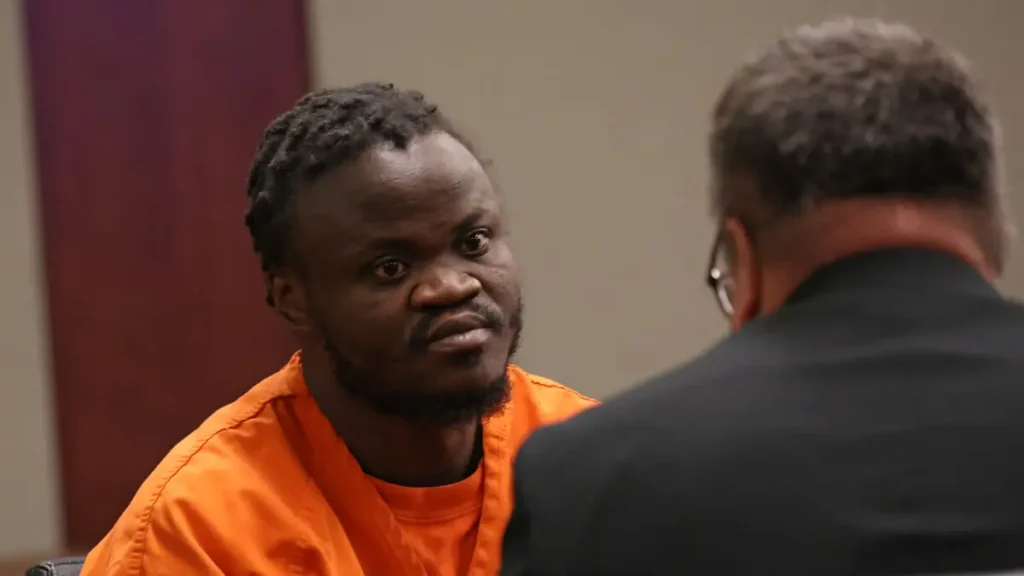
Dartoe was 35 at the time of the shooting and had lived much of his life in and around Fargo. Court records described a criminal history stretching back years, including convictions for disorderly conduct, forgery, drug offenses, illegal possession of a firearm, resisting arrest, and counterfeiting. He and Sampson Bleh weren’t strangers or casual acquaintances — they’d known each other since they were kids, part of the same circle of friends who came up together in the same neighborhoods.
That long history is part of what made the killing so hard for people to process. This wasn’t a random act of violence between strangers. It was a friendship that curdled into something fatal.
Who Was Sampson Bleh?
Sampson Bleh was 35 years old. Those who knew him described a man who had stepped into a caretaker role early in life. According to his sister, Marina Dean, Bleh helped raise his eight younger siblings after their father passed away, and he never treated it as a burden. She remembered him as far more than a sibling. “Sampson wasn’t just my big brother; he was my protector, he was my go-to,” Dean told the court.
Bleh also left behind a young son. The boy’s mother, Melvina Gbarsah, held him in her arms while she gave her statement in court, telling the room that her son would grow up without ever knowing his father.
The Night of August 23, 2024
The shooting happened on August 23, 2024, at the Maplewood Bend Apartments in the 2200 block of 12th Avenue South in south Fargo, inside a unit Bleh often stayed at. Prosecutors say the killing wasn’t a sudden outburst or the result of an argument that spiraled out of control in the moment. Instead, they described it as something Dartoe had planned.
Witnesses who testified at trial said Bleh had warned people in the apartment that Dartoe might show up looking for him — a sign that tension between the two had been building. When Dartoe arrived, according to eyewitness testimony, he was identified as the shooter. Prosecutors said he wasted little time once he reached the apartment, shooting Bleh almost as soon as he got there, without any real exchange between them first.
Bleh was struck in the chest. First responders tried to save him, but he died from his injuries. Assistant Cass County State’s Attorney Renata Selzer later told the court that testimony at trial showed Dartoe had told others beforehand that he intended to kill Bleh the next time their paths crossed — and that he followed through the moment he had the chance.
Investigation and Arrest
After the shooting, Dartoe left North Dakota. Fargo police, working with law enforcement across several states, tracked him down two months later in Atlanta, Georgia, where he was arrested in October 2024. Agencies from five states and federal authorities took part in locating him before he was extradited back to North Dakota to face charges, including murder and unlawful possession of a firearm.
Inside the Trial
The trial took place in late February 2026 and moved quickly by courtroom standards. It began on a Tuesday, and by Friday, jurors had heard enough. They deliberated for a little over an hour before returning a guilty verdict — a fast turnaround that suggested the evidence, including eyewitness accounts placing Dartoe at the scene, left little room for doubt.
Prosecutors argued the killing was premeditated, pointing to witness statements about Dartoe’s stated intentions before the shooting and the direct, purposeful way the attack unfolded. The defense didn’t dispute that a tragedy had occurred, but pushed back on how the case should be punished, later asking the judge to leave open the possibility of parole. In the end, the jury convicted Dartoe of intentional murder and illegal firearm possession, setting the stage for a sentencing hearing that would determine just how much of his life he’d spend in prison.
The Sentencing
On June 29, 2026, Judge Constance Cleveland handed down the maximum possible sentence: life in prison without the possibility of parole. She pointed to the calculated nature of the crime, describing how much time it would have taken Dartoe to track Bleh down, arm himself illegally, travel to the apartment, and shoot him almost immediately upon arrival, with no real interaction beforehand.
Cleveland also noted that Dartoe had declined to take part in most of the pre-sentencing investigation, leaving the court with little insight into his background or any signs that might have argued for leniency. She acknowledged that everyone has the capacity for both harm and good, but said Dartoe’s choices, and his silence about them, spoke for themselves. She also spoke directly to the toll the case had taken beyond the two men at its center, telling the courtroom that the community itself had suffered.
Prosecutor Renata Selzer used her time in court to connect the case to a larger problem. She told the judge the shooting reflected what happens nationwide when people reach for guns to settle personal disputes rather than walk away, and said those decisions all too often end the way this one did — in tragedy.
Family members spoke as well. Marina Dean told the court that no sentence could undo what her family had lost, but said she wanted the record to reflect that her brother’s life mattered and that his absence had left permanent pain behind. Melvina Gbarsah’s statement, delivered while holding the couple’s young son, put a face on the case’s most lasting consequence: a child who will grow up without his father.
How Fargo Is Processing It
For a city that doesn’t see many cases like this, the sentencing brought a kind of closure, but not peace. People who followed the case, many with connections to Bleh, Dartoe, or both, have used the sentencing as a moment to talk more openly about gun violence in their community. The idea that a lifelong friendship could end this way has unsettled people well beyond the two families directly involved.
Local conversations in the weeks since the verdict and sentencing have circled back to the same point prosecutors raised in court: that disputes between people who know each other, even people who grew up together, can turn deadly when a gun is added to the equation.
A Friendship That Ended in Tragedy
At its core, this is a story about two boys who grew up together in Fargo and became men whose lives ended in violence, one behind bars for life and the other in the ground. Sampson Bleh’s siblings lost a brother who had helped raise them. His young son lost a father he will never get the chance to know.
Nothing that happens in a courtroom can undo that. The maximum sentence handed to Leo Dartoe closes the legal chapter of this case, but for Bleh’s family, especially the child he left behind, the loss will last far longer than any trial or sentencing hearing.
That kind of ending leaves a mark that does not fade quickly. For Bleh’s family, especially his young child, the loss will shape birthdays, school days, holidays, and every ordinary moment that now feels different without him.
In the end, the Fargo case is a painful reminder of how fast a life can be cut short, and how long the damage can last after the shots are fired. For one family, a father is gone. For a city that watched the case unfold, the grief remains a quiet warning about the cost of violence and the fragility of trust.
